Best Dental Clinic In Bangalore Indiranagar | Best Dentist in Bangalore Indiranagar

Laser vs. Traditional: The Quick-Healing Difference in Gum Treatment
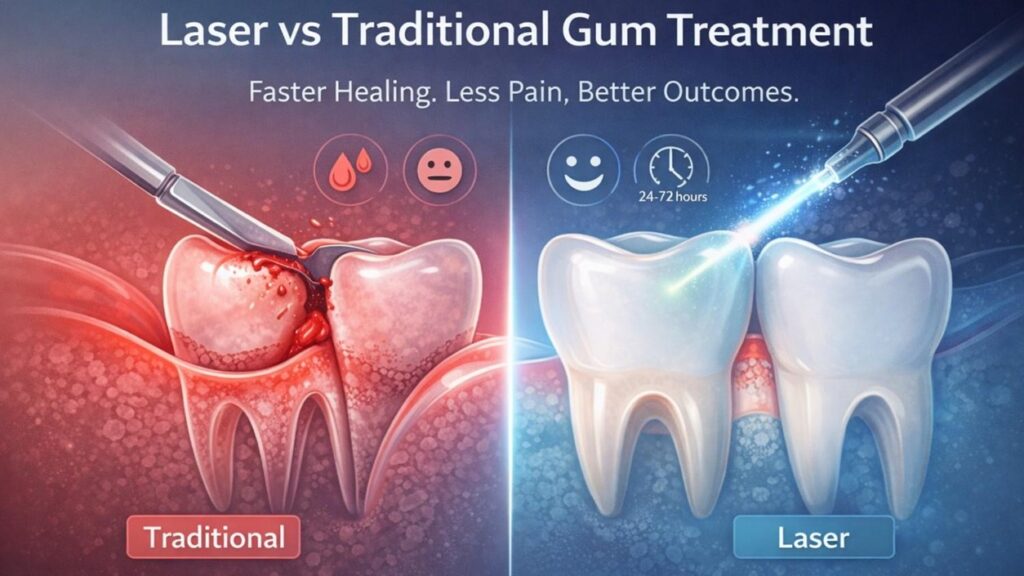
Gum disease is one of the most common oral health problems worldwide, yet it is often ignored until it reaches an advanced stage. When left untreated, it can lead to gum recession, bone loss, loose teeth, and even tooth loss. While treatment is essential, many patients delay care due to fear of pain, surgery, and long recovery times associated with traditional gum treatments.
With advances in dental technology, laser dentistry has transformed the treatment of gum disease, offering a faster-healing, minimally invasive alternative to conventional periodontal procedures. In this blog, we’ll explore the key differences between laser gum treatment and traditional gum treatment, with a special focus on healing time, comfort, and long-term outcomes.
Why Healing Time Is a Critical Factor in Gum Treatment
Healing isn’t just about feeling better; it directly affects treatment success.
Slower healing can lead to:
- Prolonged inflammation
- Higher chances of bacterial reinfection
- Increased discomfort and downtime
- Reduced patient compliance
Faster healing, on the other hand, improves:
- Tissue stability
- Bone preservation
- Long-term periodontal health
The core difference between laser and traditional gum treatment lies in how much healthy tissue is affected during the procedure.
Understanding Gum Disease Treatment Methods
Traditional Gum Surgery
Traditional periodontal surgery has been the standard treatment for moderate to severe gum disease for decades. The procedure involves making incisions in the gum tissue, pulling back the gums to expose tooth roots and bone, manually removing infected tissue and bacteria, and then suturing the gums back into place.
Common traditional procedures include:
Scaling and Root Planing (SRP)
Scaling and Root Planing (SRP) is a deep-cleaning procedure in which plaque and tartar are removed from the tooth roots using ultrasonic and hand instruments. It is commonly used for mild to moderate gum disease.
Flap (Pocket Reduction) Surgery
For advanced periodontitis, the gums are surgically cut and lifted to expose deep pockets and bone. After cleaning, the gums are sutured back into place.
Bone and Soft Tissue Grafts
Used when significant bone loss or gum recession has already occurred.
Laser Gum Treatment
Laser periodontal therapy uses focused light energy instead of blades and aggressive instruments. Modern laser systems, such as Nd:YAG and Er:YAG lasers, enable dentists to target infected tissue while precisely preserving healthy gums and bone.
Laser procedures include:
- Laser Curettage and Debridement
- LANAP (Laser-Assisted New Attachment Procedure)
- WPT (Wavelength-Optimized Periodontal Therapy)
Each approach is designed to treat gum disease without incisions or sutures.
The Healing Timeline: A Direct Comparison
Recovery Stage | Laser Treatment | Traditional Surgery |
Immediate Post-Procedure | Minimal bleeding, can eat soft foods the same day | Moderate bleeding, liquid diet recommended |
First 24 Hours | Slight sensitivity, minimal swelling | Significant swelling, moderate pain |
Week 1 | Return to normal diet, regular activities | Soft foods only, suture care required |
Week 2 | Complete initial healing | Suture removal is still tender |
Weeks 2-4 | Tissue reattachment occurring | Gradual return to regular diet |
Full Healing | 1-2 weeks for comfort, 3 months for complete reattachment | 2-4 weeks for comfort, 3-6 months for complete healing |
Why Laser Treatment Heals Faster: The Science
1. Minimal Tissue Trauma
Unlike scalpels, which cut through both healthy and diseased tissue, lasers precisely vaporize only infected tissue. This selective removal means your body has less damage to repair, resulting in faster healing.
2. Laser Bio-Stimulation
The laser energy stimulates cellular activity in the remaining healthy tissue, promoting faster regeneration. Studies show that laser treatment can increase fibroblast activity, the cells responsible for healing, by up to 200%.
3. Immediate Sterilization
The laser’s debridement action rapidly sterilizes the treatment area by eliminating bacteria, thereby significantly reducing the risk of postoperative infection. In contrast, traditional surgery often relies on systemic antibiotics to achieve a similar level of bacterial reduction.
4. Blood Clot Formation
Lasers create an ideal environment for blood clot formation in the absence of sutures. This natural “biological bandage” protects the area and facilitates healing without foreign materials that can cause inflammation.
5. Reduced Inflammation Response
Because there’s no cutting or suturing, the body’s inflammatory response is significantly diminished. Lower inflammation results in less swelling, pain, and overall healing time.
Clinical Evidence: A 2023 study in Lasers in Medical Science followed 200 patients: Laser groups healed 3.2x quicker, with 92% satisfaction vs. 65% traditional. Systemic benefits include lower CRP levels (inflammation marker), linking to reduced heart disease risk.
Pain and Discomfort: Patient Experience
During the Procedure
Laser Treatment: Most patients report feeling only slight vibrations and warmth. Local anesthesia is used, but many patients say they could have tolerated the procedure with less anesthesia than was provided.
Traditional Surgery: Requires more extensive local anesthesia or sedation. Patients feel pulling, tugging, and pressure throughout the procedure, even when numb.
Post-Procedure Pain Management
Laser Treatment: Over-the-counter pain relievers are typically sufficient. Many patients report needing no pain medication after the first day.
Traditional Surgery: Prescription pain medication is commonly needed for 3-7 days. Some patients report persistent discomfort for 2-3 weeks.
Other Key Differences Between Laser and Traditional Gum Treatment
Bleeding
Laser treatment causes minimal to no bleeding because the laser cauterizes as it works. Traditional surgery can result in significant bleeding during and after the procedure, sometimes requiring post-operative monitoring.
Sutures
Laser procedures typically require no sutures, eliminating suture-related discomfort, food trapping, and the need for suture removal appointments. Traditional surgery always involves sutures that must be maintained and removed.
Gum Recession Risk
One of the most significant aesthetic concerns in traditional gum surgery is postoperative recession, and teeth may appear longer as the gums heal. Laser treatment preserves more gum tissue, resulting in less recession and better cosmetic outcomes.
Repeat Treatments
Because laser treatment is less invasive, it can be repeated if needed without the cumulative tissue loss associated with multiple traditional surgeries.
Limitations: When Traditional Surgery Is Still Necessary
While laser treatment offers impressive advantages, it’s not suitable for every case:
- Advanced bone loss: Severe periodontal disease with extensive bone destruction may require traditional bone grafting procedures
- Aggressive gum recession: Cases requiring tissue grafts from the palate still need traditional surgical techniques
- Anatomical considerations: Some tooth positions and anatomy make laser access difficult
- Cost and availability: Laser equipment is expensive, so not all periodontists offer this option
Frequently Asked Questions
- How long does laser gum treatment take?
A full-mouth laser treatment typically takes 2-4 hours in a single appointment, whereas traditional surgery often requires multiple appointments over several weeks to treat the entire mouth.
- Will my insurance cover laser gum treatment?
Most dental insurance plans cover laser periodontal therapy when it’s medically necessary, similar to traditional surgery coverage. However, policies vary, so verification is essential before treatment.
- Can laser treatment reverse gum disease completely?
While laser treatment can effectively eliminate infection and promote tissue regeneration, periodontal disease is a chronic condition that requires ongoing maintenance. Laser treatment can arrest disease progression and restore gum health, but continued professional cleanings and home care are essential to prevent recurrence.
- What is the success rate of laser gum treatment?
Studies show success rates of 85-90% for laser periodontal therapy in appropriate cases, comparable to traditional surgery. The key difference is patient comfort and healing time rather than outcome success rates.
Making Your Decision: Which Treatment Is Right for You?
Consider laser treatment if you:
- Have mild to moderate periodontal disease
- Want to minimize recovery time
- Are anxious about traditional surgery
- Need to return to work quickly
- Want to avoid sutures and extensive post-operative care
Are concerned about gum recession and aesthetics
Traditional surgery may be better if:
- You have advanced periodontal disease with significant bone loss
- You require extensive gum grafting or bone grafting
- Laser treatment isn’t available from qualified providers in your area
- Your insurance doesn’t cover laser treatment, and cost is a primary concern
- Your periodontist recommends traditional surgery based on your specific anatomy
The Bottom Line on Quick Healing
The difference in healing between laser and traditional gum treatment is substantial and well-documented. Laser treatment offers faster healing, often 3-5 times faster, for returning to normal activities with less pain, minimal bleeding, and better aesthetic outcomes. However, this doesn’t make traditional surgery obsolete; it remains essential for complex cases that lasers can’t adequately address.
The best approach is to consult with a qualified periodontist who offers both treatment modalities. They can evaluate your specific condition, discuss realistic expectations for each approach, and help you make an informed decision based on your clinical needs, lifestyle, and priorities.